

Most of us are using AI to move faster. But speed isn’t the real opportunity. Thinking better is.
Here’s the uncomfortable truth about leadership decisions: your brain is not the neutral, rational machine you think it is. It’s an efficiency machine — constantly looking for shortcuts, patterns it already knows, and answers it’s already comfortable with.
That’s not a flaw. It’s a feature. Until it isn’t.
Three cognitive biases quietly shape most leadership decisions:
Confirmation bias — You seek information that agrees with what you already believe, and discount what doesn’t.
Simplification bias — You reduce complex, messy problems into familiar ones, even when they’re not the same.
In-group bias — You weight perspectives like yours more heavily, and discount those that differ.
None of this is intentional. It’s the brain conserving energy. But in strategy and leadership, these shortcuts cost you.
Convergent thinking — Jumping to the nearest, most familiar answer. Fast. Comfortable. Our default — and often wrong.
Divergent thinking — Deliberately widening the field of possibilities before narrowing. More options. Better decisions.
The problem is we almost always skip straight to convergent thinking. We decide before we’ve really explored. We solve the problem we already had an answer to.
AI doesn’t carry your biases. It hasn’t worked in your industry for 20 years. It doesn’t know your preferred solution or your team’s politics. Which means it can push back in ways that people around you often won’t.
Used well, AI is a divergent thinking partner — one that forces you to consider what you’d otherwise skip. It turns a challenge into 8 possible opportunities before you’ve committed to one path.
→ “What am I not seeing here?” → “Who is most impacted that I haven’t considered?” → “Give me 8 ways to reframe this challenge as an opportunity.” → “Where might my assumptions be wrong — and what would I do differently if they are?”
We recently worked with a group of operational supervisors in Queensland. Within minutes of using AI as a strategic thought partner, they saw possibilities they hadn’t considered — not just efficiency gains, but a different way of approaching the decisions in front of them.
The outcomes: improved productivity, lifted morale, and reduced safety risks.
That’s not AI as a productivity tool. That’s AI as a leadership upgrade.
The leaders pulling ahead aren’t the ones with the sharpest instincts. They’re the ones who know when to challenge their instincts — and who use every tool available to do it.
AI won’t make the decision for you. But it will make sure you’re not just picking the easy one.

Ghaith has over 20 years of experience in leading and delivering organization wide change programs, strategic planning, aligning organisational performance with strategy, and optimising key business processes. He has successfully led various HR functions and major change programs in senior corporate roles and, now, as Principal of Hikmah Consulting, continues to support organisations of all sizes navigate strategic planning, drive organisational performance and navigate the diversity, equity and inclusion challenges of global environment. Ghaith has a particular passion for improving individual and organisational performance, leadership and change capability.
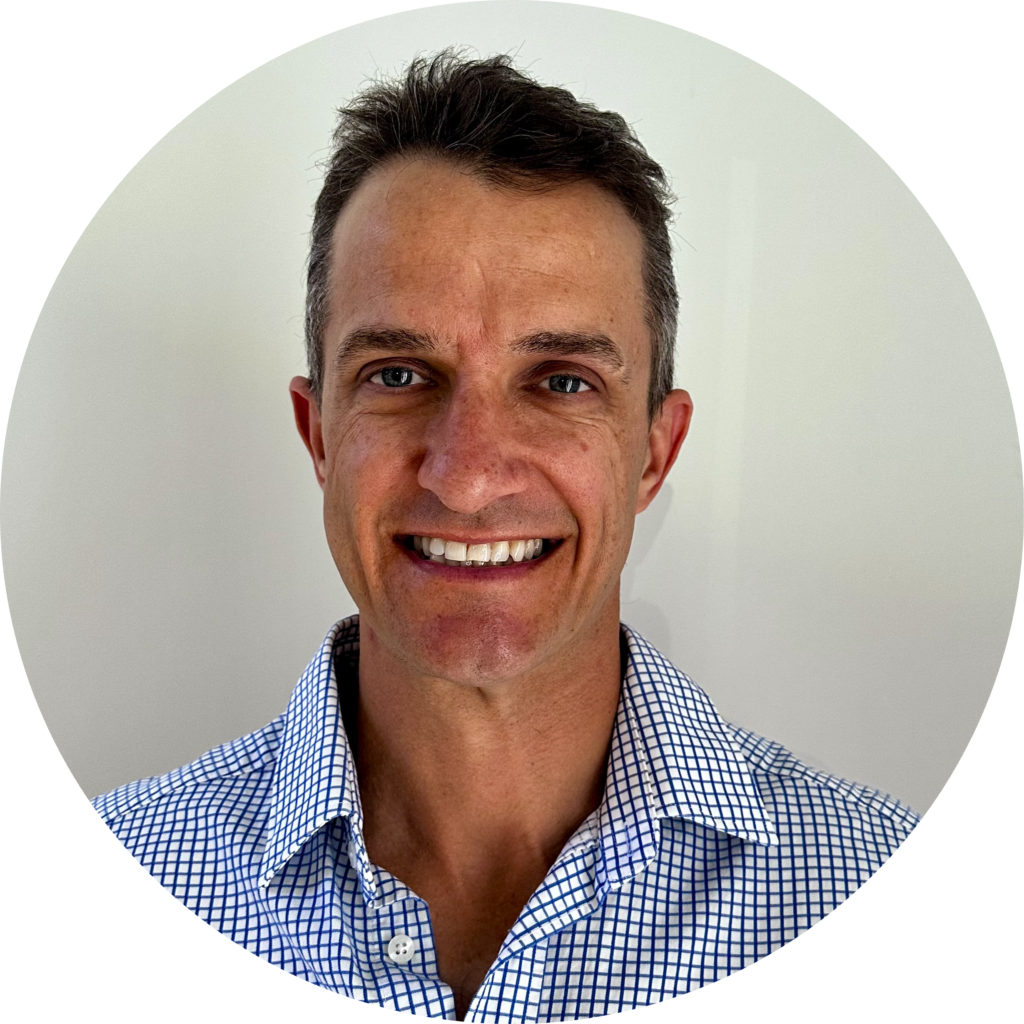
As a catalyst for change, my life’s purpose revolves around empowering individuals to surpass their perceived limits, both in their personal and professional spheres.
Background and Expertise
With over two decades of hands-on experience in leadership roles, particularly within the challenging landscape of the mining sector, I’ve honed my expertise in leveraging the power of neuroscience. Over the last several years, I’ve delved deeply into neuroscience leadership, culminating in an advanced diploma in this field. My primary focus remains on cultivating psychologically safe workplaces, the bedrock for transformative growth and success.
Transformative Approach
My approach is rooted in a felt experience, designed to shift mindsets and catalyse change. I treat each client as family, ensuring that every engagement exceeds expectations and adds significant value. What sets me apart is my innate ability to connect with individuals from all walks of life, enabling the seamless integration of knowledge, leading to those profound “aha” moments.
Client Impact and Mission
At the core of my work lies a belief: it’s humans unlocking the potential in other humans that truly influences positive change in the world. As such, I cater to organisations deeply invested in people-centric growth and development. Having delivered impactful neuroscience-backed programs and keynotes to some of the nation’s largest organisations, my clients consistently express their desire for more, driven by my enthusiasm, expertise, and ability to connect on a profound level with their teams.
Your Transformation Journey
Let my team and me guide you in harnessing the potent amalgamation of neuroscience and leadership, creating a psychologically safe workplace that allows your team’s full potential to flourish. I guarantee our collaboration will not only solve problems but also surpass all expectations, ensuring a transformative experience.

I am an experienced practicing Human Resources Executive and Neuroleadership Facilitator. I hold a Bachelor of Medical Science, majoring in Neuroscience, and a Master of Commerce, majoring in Human Resource Management. As such, I am uniquely positioned to understand the current challenges of leadership teams, and bring a scientific approach to leadership development that enables leaders and their teams to thrive. I understand the science behind the brain, business, and leadership. By bridging the gap between science and business, I believe we can develop peak leadership performance, leading to agile, resilient, and engaged workplaces.
Key Skills and Experience:
• NeuroTREAD accredited facilitator
• Executive Coach: Institute of Executive Leadership
• Bachelor of Medical Science (Neuroscience): Macquarie University
• Master of Commerce (HR Management): Western Sydney University


Niyi Borire is an Award-winning Neurologist and Neuroscience researcher, with a vision to empower leaders to create personal, professional or organizational change; build their institutions into a legacy; and understand how to create a moral authority by leveraging on neuroscience principles.
He is the CEO of Legacy Consults, a NeuroLeadership expert, Certified Leadership Coach, Keynote Speaker and an Engaging Trainer/Facilitator per excellence; having completed several accreditation qualifications including: a Diploma in Neuroscience for Business from MIT, Boston USA; The Neuroscience of Leadership course with EnHansen Performance; and the John Maxwell Team Certification Programme.
Niyi has also garnered over a decade of management and leadership expertise as the Director of Southwest Neurology, a thriving and successful private practice based in Southwest Sydney. He is also a neuroscience lecturer at the University of New South Wales. His research has won many awards including the prestigious Golseth Young Investigator Award, presented by the American Association of Neuromuscular and Electrodiagnostic Medicine (AANEM).
Niyi Borire is the founder and host of Brain, Mind & Change (BMC), an online series which combines his scientific background and pastoral assignment, to teach people how to achieve mastery of their brain, rewire their mind and change their world. He is also the convener of LEGACY, an annual virtual executive conference which had over 6000 registrants with a daily audience of 1000 participants in the flagship edition which held in September 2021. The conference hosts guest experts and mentors in vast areas of leadership who divulge their knowledge to stir up a new generation of young leaders and executives, whose purpose and passion would outlive them and make a remarkable change in the world – Leaders who want to live for Legacy.
An Amazon best-selling author, Niyi has written four books, including his autobiography titled ‘Navigating Change: Timeless Secrets for Growth in an Ever-Changing World’. In this memoir, readers are provided principles and perspectives to effectively navigate change in their lives. In ‘The Diary of a Braniac’, Niyi expresses his purpose and values in his profession as a neurologist, how his career syncs with his ultimate purpose as a pioneer of change and how his profession aids his mission as a people builder. Finally, ‘Vitória é certa’ speaks to the possibility and certainty of victory for anyone who is willing to apply themselves to the tried and tested principles within its pages. In 2021, Niyi Borire founded Changemakers International book club, a non-profit organization which provides a platform for published and unpublished writers worldwide to share literary work, and a creative environment which inspires confidence. The book club has published a book titled Hagar, which explores biblical Hagar’s life in present time, drawing lessons and touching on a vast array of subjects from surrogacy to abandonment to hearing from God as well as many topics that greatly affected women then and strongly affect many women today.
Niyi is also the pioneer of NeuroChange, an executive development programme which leverages on key neuroscientific principles to equip executives and leaders with the strategies required to achieve mastery of their brain, mind, and body. The main objective of NeuroChange™️ is to empower leaders to create change by rewiring their neuronal networks and unleashing the power of their minds.
This course promotes personal resilience, professional performance, organizational efficiency, and leadership development to enhance leadership capacity. Niyi and his wife, Yemi, pastor Beautiful Gate Sydney in Australia. They are blessed with two wonderful boys

Angeline is a charismatic leader, change strategist, entrepreneur, coach and facilitator with over fifteen years of experience supporting individuals and organisations manage complex change and transform culture.
Through ground-breaking insights that neuroscience research has delivered, Angeline is passionate about sharing practical ways for leaders to have superior self-leadership and be equipped to manage their teams through change and adversity, with the brain in mind.
Having done her coach training with the Neuroleadership institute, the neuroscience of coaching and leadership changed her world. Angeline has enhanced these attributes by becoming a NeuroTREAD™ program accredited facilitator which has extended her capabilities in the neuroscience of change, leadership and performance.
Her coaching and workshop programs go to the heart of what creates desire, commitment, innovation and collaboration in teams and how to energise people to act. Angeline possesses a unique commercial edge through building and directing her own businesses.
Angeline has worked with multi-national organisations such as Woolworths Group, AMP, RBA, Campbell-Arnotts and Deloitte. Alongside change consulting and coaching, Angeline has built a successful business to support organisations manage employee retention. The programs apply neuro-science principles to elicit greater candour from employees and therefore, deeper insight for leaders to take action to transform people culture.
Relevant Qualifications
• NeuroTREAD™ Accredited Facilitator – EnHansen Performance
• Accredited Certified Coach – International Coaching Federation
• Brain Based Coach Certification – Neuroleadership Institute
• PROSCI certified in Change Management.
• Diploma in Human Resources Management

Accredited in the NeuroTREAD™ program, Loretta Mitchell is an experienced Leadership Coach, Facilitator and Speaker, building on 20+ years’ developing leaders and performance cultures across Asia Pacific, the US, and the UK. Loretta is the Founder and Principal Consultant of Neu Perspectives, an organisation that leverages evidencebased Neuroscience principles to help individuals and organisations develop strong leadership skills and achieve peak performance outcomes.
As a Leadership Coach, Loretta’s clients range from aspiring leaders through to senior executives across multiple industries. She has an engaging and approachable style that encourages clients to take ownership of their development process. Loretta’s approach is underpinned by the latest leadership research and neuroscience findings as they apply to leadership and performance. Loretta works with her clients to challenge their thinking, explore new perspectives and develop an understanding of how the brain impacts thinking, behaviour and performance. Clients learn to use these levers to approach any challenge with greater skill and confidence.
As a Learning & Development professional and speaker, Loretta has expertise creating and facilitating leadership and performance programs at all levels of organisations. Loretta also enjoys speaking engagements to large and small audiences, in person and online. She enjoys sharing concepts that create a fundamental understanding of key human behaviours, leading to real change and observable results.
Loretta’s ability to relate to a broad range of clients and challenges comes from her diverse career in senior People, Development and Culture roles for leading Australian and international organisations, including Minter Ellison, Ricardo plc, Macquarie and Coles Myer. Industry experience included Professional Services (Legal and Engineering), Retail, Management Consulting and Banking. Loretta offers proven adaptability working across multiple countries and within a range of business formats, from large corporates and international partnerships to SMEs and start-ups.
Outside of work, Loretta is a strong believer in giving back to her community. She has been volunteering since 2016 as a teacher of critical thinking skills through the Primary Ethics school program. Loretta also holds various roles on P&C and other committees and enjoys these opportunities to help make a difference.

Joanne Fisher founded Fisher People in Culture, to bring the best of culture and talent expertise to busy Business and HR Leaders of SMEs. Her mission is to partner with SME’s to create accelerated growth in their business value and profitability via the power of optimal cultural foundations. Practically this means creating space to tap into new models, applied practice and approaches, to shift “status quo” thinking and create the conditions for their people and business to thrive in today’s business world. Fisher People in Culture builds on the success and strong relationships of its origin business, Fisher Management Consulting.
Over her 30-year career, Joanne has worked with clients from around the globe, consulting to and working in SME’s, to effectively lead across diverse cultures, manage transformation, build collaborative teams with the right talent, and facilitate ongoing management development, particularly in times of change. She has a sincere passion for client success and well-being and a high level of intercultural understanding. The many experiences gained working with and in German and international businesses have

My mission is to enable leaders to lead with vision and heart, and deeply connect with their team, so that they create significant personal and business success. I’ve spent the last 20 years working in Senior Human Resources and leadership roles, where I have coached and developed hundreds of leaders to make a significant difference in their teams and business. Over this time, I’ve identified why some leaders shine like a beacon and why others don’t, and I LOVE helping leaders flick the switch on their ‘lightbulb’ moments.
I’ve worked across all sorts of industries including FMCG, Medical Devices, Food and Beverage, Telecommunications, Industrial products, and Public Health Care. I have delivered great outcomes for companies including Lion, Fujifilm, Vodafone and NSW Health, as well as many smaller businesses

Since 1989, Wendy Jocum has been involved in the field of HR, L&D, coaching, OD, training, consulting, and facilitation.
She is passionate about people development and implementing effective people management strategies, through developing individual, team and organisational performance.
She does coaching, facilitates workshops (face to face and online), supports and develops her clients (from frontline to senior executives).
Wendy supports leaders and team members at all levels, to build capability, achieve career aspirations, deal with current and future challenges, address specific development gaps, while harnessing their strengths.

Vannessa McCamley has earned a reputation both in Australia and internationally, for assisting organisations, teams and individuals to achieve impressive results through behavioural change to increase performance, productivity and revenue. Leveraging the latest in Neuroscience for brain-based, evidence rich strategies for improving leadership of self and others.
With 20 years IT Industry experience working extensively with individuals at all levels. Known by clients for being accountable for delivering results. Knowledge of being a high performer individually and achieving results through teams, helps to define the programs design, intelligence & outcomes.
Leadership and Change Programs include being a key facilitator of the IAG Insurance Leading Change and one of 12 facilitators globally to roll out Microsoft Change Management & coaching program to 15,000 Leaders.

Kristen Hansen empowers leaders and employees with the latest brain research to effectively lead themselves and others through change and to high performance. Kristen is a pioneer in the field of the neuroleadership through executive coaching, training, keynote presentations and blended and digital learning.
Kristen’s business, EnHansen Performance focusses on “transforming managers and executives into agile leaders of change and performance”. Her programmes include Performance and Wellbeing, Consulting and Influencing, Coaching for Managers, Resilient Leaders, Leading Change, High Performance Teams and Managers to Leaders.
EnHansen Performance partners with a number of experts and neuroscientists to develop leadership programmes utilising the latest neuroscience research and technology. Drawn from her NeuroTREAD model: how to Think, Regulate, Engage, Adapt and Develop, over 15,000 managers throughout Australasia and the US have benefited from her unique and practical neuroscience approach. She has worked with executives from Google, Telstra, Westpac, Commonwealth Bank, Macquarie Bank, The Prime Ministers Office, Goodmans, NRMA, IAG, the Department of Transport and Main Roads and the Defence Force.
Kristen’s first book is TRACTION – The Neuroscience of Leadership and Performance